
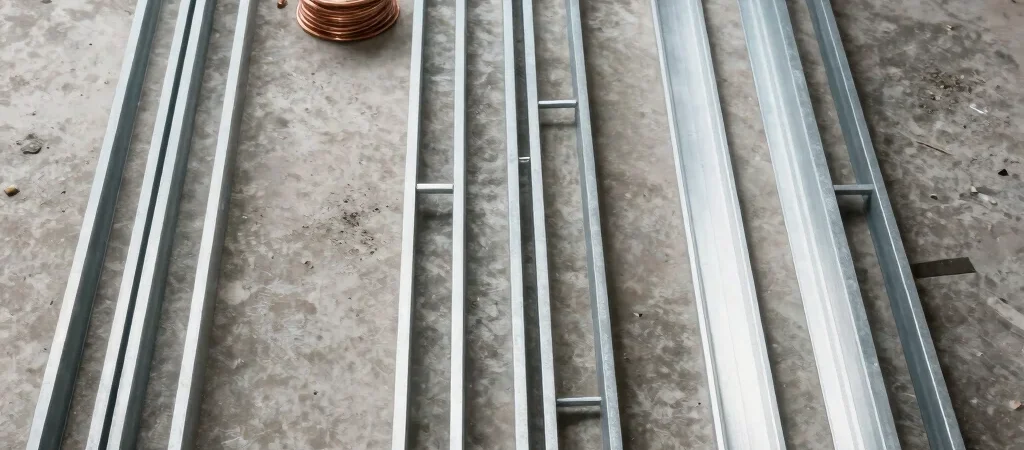
During a strip-out, metal tends to appear in several forms: framing, pipe, flashing, fasteners, and hardware attached to other materials. Gathering it together may feel efficient, but a little separation can make later handling and identification easier. Start by sorting what is clearly recognizable, and leave uncertain or composite pieces aside for a closer look.
Separate By Material Type
Keep obvious steel, copper, and aluminum pieces in distinct groups when the site setup allows it. Do not assume that a coated piece, fitting, or cable is a single material just because its outer surface looks familiar. Where identification is uncertain, label the material as mixed or unknown rather than guessing.
Notice What Is Attached
Metal may still be attached to drywall, insulation, wood, or concrete, and removing it can take time or introduce handling risks. Consider whether separation is appropriate for the project and whether the recipient accepts attached materials. Forcing every item into a clean category can create extra work without improving the outcome.
Confirm The Receiving Route
Ask the scrap handler or facility what material types it accepts, how it wants them prepared, and whether mixed pieces are allowed. Keep sharp edges and awkward lengths in mind when choosing containers and moving material around the site. A clear description of the load is more useful than a broad label like metal scrap.