
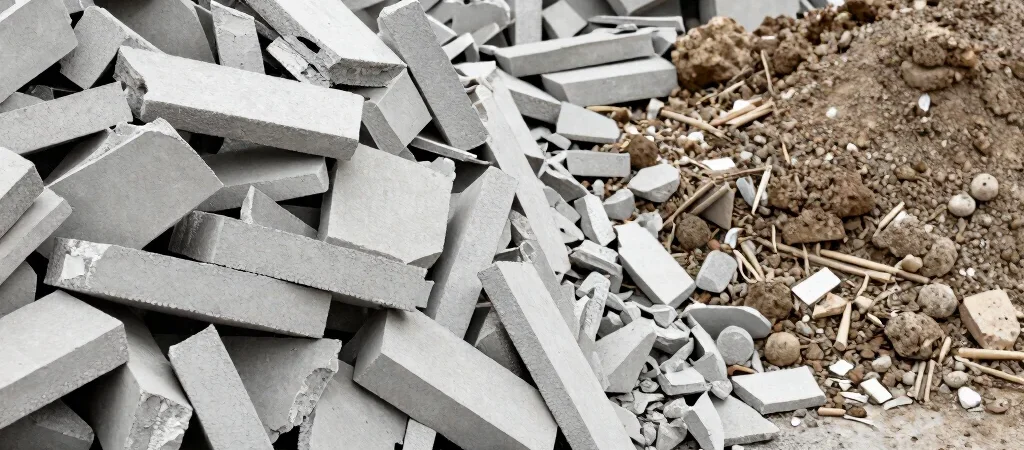
After a slab is removed, the concrete may look like one obvious pile. Look closer and there may be reinforcing steel, soil, asphalt, or bits of masonry mixed in. Those differences matter when deciding what can be kept separate and what questions to ask before the material leaves the site.
Identify What Is In The Pile
Start with the source: a clean concrete pad is different from rubble gathered across several rooms or work areas. Note whether the pieces are reinforced, coated, or mixed with brick and block. A quick visual check will not answer every processing question, but it gives a recycler or salvage operator useful context.
Keep Other Materials Apart
Separating concrete from soil, timber, drywall, and general demolition debris can make the next handling step clearer. If steel reinforcing bars are visible, ask how the receiving facility wants them handled rather than assuming they should be cut out on site. The right approach depends on the material condition, equipment, and local acceptance requirements.
Ask Before Moving It
Before arranging transport, confirm whether the receiving location accepts the specific load and whether it has rules for attached materials or oversized pieces. Keep a simple record of where the concrete came from and what was sorted out. The useful first step is not to call every broken piece recyclable; it is to describe the pile accurately.